LLP Logo

LLP Logo

Thursday, 24 November 2011

Luminatia la Ieud, Maramures - All Souls' Day in Ieud, Maramures, Romania


In the village of Ieud, county of Maramureş, in Romania, people still preserve their traditional costumes and their ancient traditions and customs.
According to tradition, Luminatia – All Souls’ Day – is the commemoration of all the dead members of the family. We never forget the beloved members of the family who have gone to Heaven, and, even if we “visit” them each time, we feel we need them close to us, on All Souls’ Day we have special feelings for them.
In Ieud this commemoration takes place in the week before St. Dumitru’s Day, on Fridays for the Greek-Catholics and on Saturdays for the Orthodox.
It is a special day through its emotional charge and through the rituals that take place.
Everything starts with the preparation of this event: in the three cemeteries in the village the “swarm” of people prepare the tombs – they dig the earth of each tomb (our dead rest in the ancient soil, not in concrete bins), they wash and clean the wooden crosses, women prepare the “parastas” - the traditional memorial meal bread (a special type of wreathed bread which is brought to church only when commemoration prayers are made for the dead, and which is made by widows).


On All Souls’ Day, when the church bells announce that the prayers begin, people come to church dressed in mourning clothes. Women put a candle and a note on which they write the names of their dead in the “parastas” and place it in front of the church. The candle burns throughout the prayers. After that, together with their family members, they go to the graveyard and light candles on their ancestors’ tombs. After the specific church service for the occasion, the priest reads the notes with the names of the dead people commemorated on this day. The end of the prayers is announced by the church bells.


Unlike other villages, in Ieud priests do not pray at or consecrate the tombs by asperges.
All the ceremonies happen outside in front of the churches, and the order of the ceremonies is respected each year: first at the Biserica din Deal (the Church on the Hill, built in 1364), then at Biserica noua (the New Church, built in 1984) and last at Biserica din Ses (the Church on the Plains, built in 1717).
After all ceremonies are finished, on that evening is served the commemorating dinner for All souls’ day – the table is set behind the church and priests and other church staff are invited, as well as poor people from the village and the strangers who happen to be in church at the time.
All the special wreathed bread loaves brought to church on this occasion are dispensed among the church staff, and most of them are given to the poor and the sick people from the village.
As in the case of the prosphora, the memorial meal bread is not given to the cattle, it is eaten only by people.


Romanian version:

În satul Ieud, Maramureş, se mai păstrează încă portul popular, tradiţiile şi obiceiurile strămoşeşti.
Prin tradiţie, Luminaţia este sărbătoarea tuturor morţilor. Pe cei dragi, care au plecat dintre noi, nu-i uităm niciodata şi, deşi îi “căutăm” ori de câte ori simţim nevoia de a-i avea aproape, în această zi a Luminaţiei ne încearcă sentimente aparte.
La Ieud, Luminaţia are loc în săptămâna premergătoare sărbătorii Sfântului Dumitru, în zilele de vineri (greco-catolicii) şi sâmbăta (ortodocşii).
Este o zi deosebită prin încărcătura emotională, prin ritualurile ce se desfăşoară.
Totul începe cu pregătirea acestui eveniment: în cele 3 cimitire “furnicarul” de  oameni  pregătesc mormintele – le sapă (morţii nostri îşi dorm somnul de veci în pământul strămoşesc, nu în buncăre din beton); spală sau repară crucile de lemn; femeile pregătesc parastasul (colac împletit special, care se duce la biserică numai când se fac rugăciuni de pomenire a morţilor, şi care este făcut de femei văduve).
În ziua Luminaţiei, la auzul clopotelor care vestesc începerea rugăciunilor, lumea îmbrăcată în doliu se îndreaptă spre biserică. În faţa bisericii femeile aşează parastasul în care pun o lumânare ce va arde pe toată durata rugăciunilor şi un bileţel pe care au scris prenumele celor morţi din familie, apoi se duc la morminte, unde, împreună cu ceilalţi membri ai familiei, pun lumânări şi le aprind. 


După slujba specifică acestui eveniment, preotul pomeneste morţii (citeşte bileţelele cu numele), apoi se încheie rugăciunile, moment anunţat tot de clopote.
Spre deosebire de alte localităţi, la Ieud preotii nu sfinţesc mormintele prin stropire cu agheazmă, nici nu fac rugăciuni la morminte. Totul se desfăsoară în faţa bisericilor, iar ordinea de desfăsurare a rugăciunilor este aceeaşi în fiecare an: Biserica din Deal (construită in 1364), Biserica nouă (construită in 1984) şi Biserica din Şes (construită in 1717).
După ce se încheie intreg serviciul religios, din acea zi se serveşte cina de sufletul morţilor – masa este asezată în dosul (spatele) bisericii şi participă slujitorii bisericii, oamenii săraci şi eventualii străini care se află la biserică în acest timp.
Toate parastasele sunt impărţite intre slujbasii bisericii, majoritatea ajungând apoi la oamenii necăjiţi sau bolnavi din sat.
Ca şi prescura, parastasul nu se dă la animale, este consumat doar de om.

Author: inv. Maricuta Pasca, Scoala Ieud, Maramures
Translated into English by prof. Daniela Buda

Monday, 21 November 2011

4-10 December - "Computer Science Education Week"

Mr. Mihai Jalobeanu, Professor of Computer Science at the Faculty of Informatics, Western University "Vasile Goldis" Arad, Romania, has recently published an article about the"Computer Science Education Week", on a professional e-group for teachers of ICT and other teachers using ICT in teaching. 
I have taken the liberty to quote his article here, because one of our project objectives and expected impact is to improve ICT skills in our students and peer teachers. Another reason for this article is the fact that in each partner school there are Computer Science teachers and some of the schools have also high school students attending them, so it may be useful information for them.


"Did you know that the week 4-10 December is declared as the "Computer Science
Education Week"?  Instruction starting with primary school till post-graduate level, but also in the professional companies and societies. At global level it is celebrated in the 2nd week in December to commemorate the birthday of an important figure in the short history of this science – Admiral Grace Murray Hopper, born on December 9, 1906, an important figure in Computer Science from the 40s to the 70s.
More details here: http://www.csedweek.org
The professional associations IEEE Computer and ACM support this initiative (That is where I have found out about this from)
The crisis in education is evident all over the world, at different levels of seriousness, particularly in Computer Science.. It is estimated that in the following 5-7 years the Computer Science university graduates will be able to cover only maximum 50% of the jobs that will be created in this field of activity, although the jobs in Computer Science continue to be best paid of all.  As the modern society is more and more dependent on ICT, there are too few professionals in this domain that graduate Computer Science , I mean professional scientists very inventive and passionate about ICT. ICT fluency means more than technological or digital initiation. As in SFD – the Day of liberty in programming, the CSEw, The Computer Studies Education Week, wants to call up teachers, companies, parents and students to make them aware of these aspects, and especially to convince the youth about the beauty of Computer Science.
On the other hand, the great number or innovators in Computer Science, such as Steve Jobs or Bill Gates , have asserted themselves through their passion, personal vision and intuition, not due to their formal training. Unfortunately, education systems have learnt too little from this. Maybe from now on?”

 Romanian version:

Domnul Mihai Jalobeanu, profesor de informatica la Universitatea de Vest "Vasile Goldis" Arad, a trimis recent un mesaj despre "Săptămâna Instruirii în Informatică" pe e-grupul pentru profesorii de informatica si alti profesori care folosesc TIC in predare la clasa.
Mi-am permis sa citez articolul sau pe blogul proiectului nostru deoarece unul din obiectivele proiectului Ethno treasure hunt si impact asteptat este imbunatatirea deprinderilor TIC ale elevilor si profesorilor implicati in proiect, din cele 6 tari. Un alt motiv este acela ca in toate cele 6 scoli sunt implicati in echipele de proiect si profesori de informatica si unele scoli au si nivel de liceu, asa ca aceste informatii le pot fi utile.
Impreuna cu colega poloneza, care are sarcina de a redacta Calendarul cu traditii in cadrul proiectului, am decis sa includem acest eveniment si in acest calendar.

“Stiați că săptămâna 4-10 Decembrie este declarată "Computer Science Education Week", pe românește "Săptămâna Instruirii în Informatică" ? Instruire din școala primară, până la nivel post-universitar, dar și în cadrul companiilor și societăților profesionale ... La nivel global, celebrându-se în cea de a 2-a săptămână a lunii decembrie pentru a comemora ziua de naștere a unei importante figuri din istoria destul de scurtă a acestei științe - e vorba despre doamna amiral Grace Murray Hopper, născută la 9 dec.1906 și personaj emblematic în anii de început ai calculatoarelor, din anii '40 până în '70. Detalii la: http://www.csedweek.org
Asocia
țiile profesionale IEEE Computer, ACM susțin desigur această initiativă (de acolo am aflat).
Criza învă
țământului se manifestă, la diferite nivele de gravitate, în întreaga lume, cu particularități speciale în informatică. Si se estimează că în următorii 5-7 ani absolvenții facultăților de profil ar putea acoperi cel mult jumătate din posturile care vor apare în domeniu. Deși meseriile din acest domeniu continuă să fie dintre cele bine remunerate. In condițiile în care societatea modernă este tot mai dependentă de tehnologia informației, producem mult prea puțini informaticieni - în sensul oamenilor de știință pricepuți, inventivi și pasionați de informatică. Fluența în informatică înseamnă mult mai mult decâț alfabetizarea tehnologică sau digitală.
Ca
și la SFD - ziua libertății în programare, și CSEw – Săptămâna Instruirii în Informatică urmărește mobilizarea dascălilor, firmelor si companiilor, părinților și elevilor, pentru a conștientiza toate aceste aspecte. Mai ales pentru a convinge tineretul asupra frumuseții acestei meserii.
Pe de altă parte, numărul mare al inovatorilor din informatică, nume mari în istoria calculatoarelor, precum Steve Jobs, Bill Gates, s-au impus prin pasiune, viziune personală
și intuiție, nu datorită școlii sau cursurilor urmate. Iar sistemele de învățământ n-au prea învățat încă din aceste lecții dure. Poate de acum încolo?"

Mihai Jalobeanu

Translated into English by Daniela Buda

Sunday, 20 November 2011

November 30 - St. Andrew Day

Sf. Andrei (St. Andrew) is the patron saint of Romania. He is the one who introduced Christianity in the former region of Scythia, where the Geto-Dacians lived, in the region between the Danube and the Black Sea, which is nowadays part of Romania.
Besides the religious meaning of this day, it is also known in the Romanian folklore as the day when many legends come to reality.
One of them says that on this day St. Andrew shares the food for winter with the wolves. On this day it is said that wolves can turn their heads to see behind them. It is a day when people don't work in their homesteads for fear that wolves may attack them or their cattle. If the master of the house does not work on this day, wolves cannot approach to attack his homestead and family. Sarbatoarea de Sf. Andrei

St. Andrew's night is also a very important night for whitchcraft. It is said that on this night unmarried young women can see the face of their future husband.
On this evening, the girls make a small cake made of flour, salt and fresh water. The water has to be brought from the water well in a clean cup and nobody should use that water before being used for that cake, and the flour and salt have to be taken from a fresh packet opened for this occasion. The cake is baked in the oven and the girl eats it before going to bed, without drinking any water. It is said that the image of her future husband will come in her dream to bring her water to drink.
Well, I can tell you I tried it once, a few years before I got married. But during the night I dreamt that I was quarreling with my dad and my brother because they did not want to give me some water to drink. It meant that I was not meant to marry the following year. :d  But I got married a few years later. :)) So all this may be true.
You can try it, too. :d
Daniela

Thursday, 10 November 2011

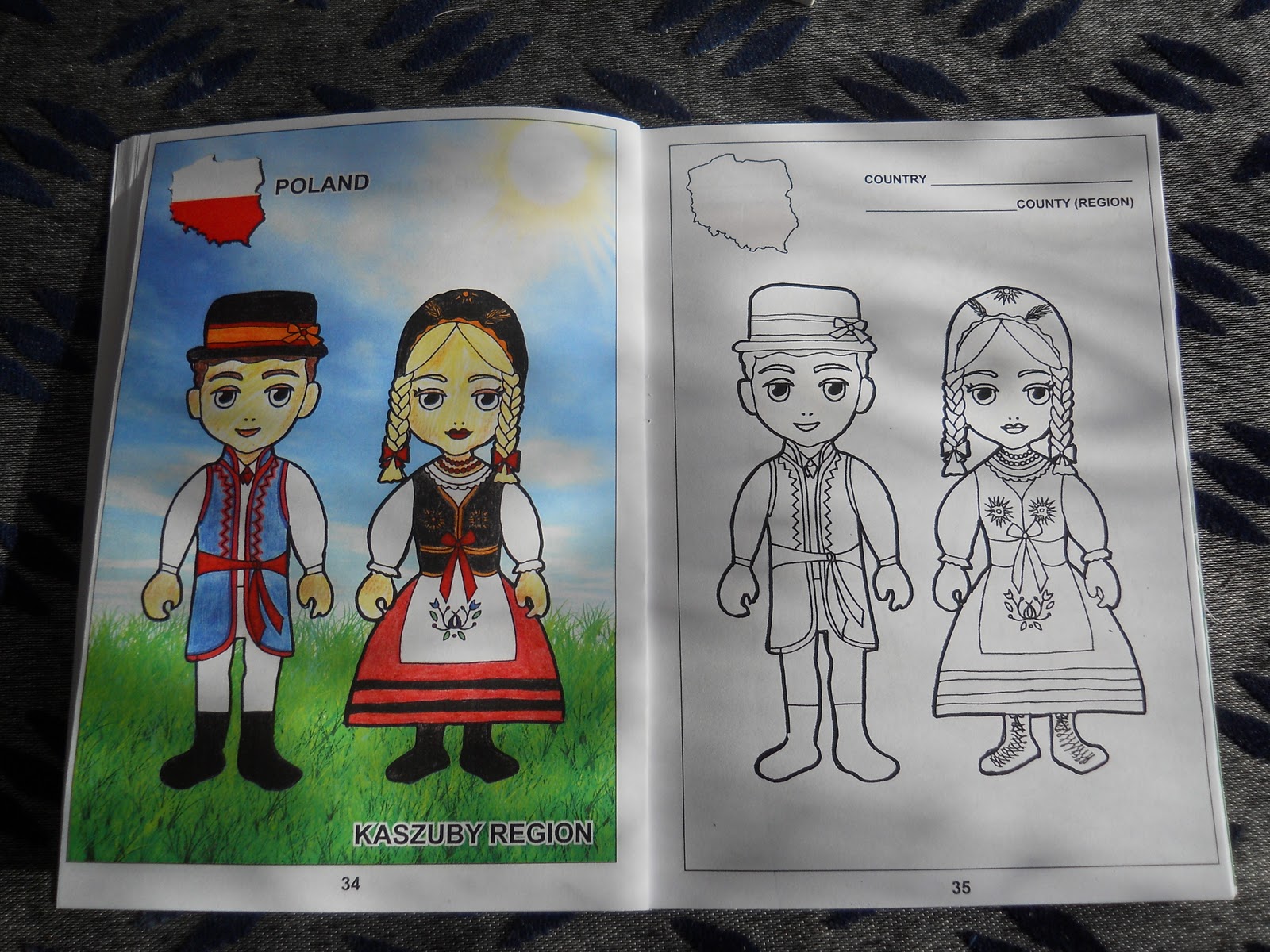
Traditional costumes around Europe - Coloring book and Card game


Last school year (2010-2011) we all studied the traditional costumes from our countries. The end product that  has resulted is a Colouring book and a Card game called "Ethno treasure hunt - Traditional costumes around Europe". They contain the drawings and descriptions of traditional costumes from several regions of the six countries involved in the project: Bulgaria, Italy, Lithuania, Poland, Romania and Turkey.


Octavian Pop, the Romanian Arts teacher has coordinated the realization of these products, as he proposed them from the very beginning. He was helped, here in Romania, by his wife, Marcela Pop, by Marcela Zaplac to make the model and the descriptions of the Romanian costumes. He worked with some of his students ( Dan Cont, Alexandru Morar, Roxana Unguras, Sergiu Pop, Darius Miclaus, Raul Fozecas and Vasile Temian) to draw and colour the Romanian costumes. And I, Daniela Buda, translated the texts into English.


We have described the costumes and we added the project Anthem:


As I have already stated, this product is the result of our joint effort, so I will also present the partner teams who worked on this product:


The Polish partners:
Teachers: Joanna Wilczyńska, Izabela Marczak, Dorota Zajączkowska,
Students: Oliwia Ormaniec, Aleksandra Grandys, Klaudia Garncarek, Magdalena Głowacka, Aleksandra Stasiak


The Turkish partners:
Teacher: Özgür Boyacı
Student: Ismail Kaygısız


The Lithuanian partners:
Teachers: Rima Stongviliene, Renata Jankeviciene
Students: Gabriele Brazinskaite, Urte Brazinskaite


The Italian partners:
Teachers: Briguglio Antonio, Miuccio Anna Maria, Linda Cigala, Nina Morabito, Mimma Crupi
Students: children from class 2A and 2B from Instituto Comprensivo di Santa Teresa di Riva


The Bulgarian partners:
Teachers: Valentina Kercheva, Daniela Ruseva, Maria Spasova
Students: Kristiyan  Stanev, Berin Yahov, Radostina Rumenova, Seihan Asan, Rubin Iliev, Stiliyan Emilov, Teodora Velcheva, Jeihan Behir,  Emin Nazif, Elica Doncheva, Rumyana Ivanova, Doroteya Kraicheva, Kristina Encheva, Magdalena Manova, Yoanna Markova, Merlin Zeinolova, Yasmin Samirova, Rumyana Andreeva; Velika Todorova, Lyubomira Stoyanova, Maria-Magdalena Stoyanova, Plamena Petrova, Hristiana Naidenova


We have done a very good job, haven't we? :)


Romanian version:


Anul trecut scolar (2010-2011), am studiat costumele p[opulare din tarile noastre, Produsul final rezultat din aceasta cercetare il reprezinta Cartea de colorat si jocul de carti “Ethno treasure hunt – Costume populare din Europa". Acestea contin desene si descrierea unor costumelor traditionale din deiferite regiuni din cele sase tari implicate in proiect: Bulgaria, Italia, Lithuania, Polonia, Romania si Turcia.
Octavian Pop, profesorul nostru de arte, a coordonat realizarea acestor produse, avand in vedere faptul ca el a propus aceste produse inca din faza de redactare a aplicatiei pentru proiect. El a fost ajutat sa realizeze modelele si descrierile costumelor de catre Marcela Pop si Marcela Zaplac. Octavian a lucrat cu elevii sai ( Dan Cont, Alexandru Morar, Roxana Unguras, Sergiu Pop, Darius Miclaus, Raul Fozecas and Vasile Temian) la desenarea si colorarea costumelor româneşti. Iar eu, Daniela Buda, am tradus textele in limba engleza.
Am descris costumele si am adaugat in carte si imnul proiectului.
Dupa cum am mai spus, aceste produse au fost realizate in colaborare cu partenerii nostri, asa ca am prezentat si profesorii si elevii din scolile partenere, care au lucrat la ele.


Daniela Buda - European project coordinator