LLP Logo

LLP Logo

Thursday, 10 November 2011

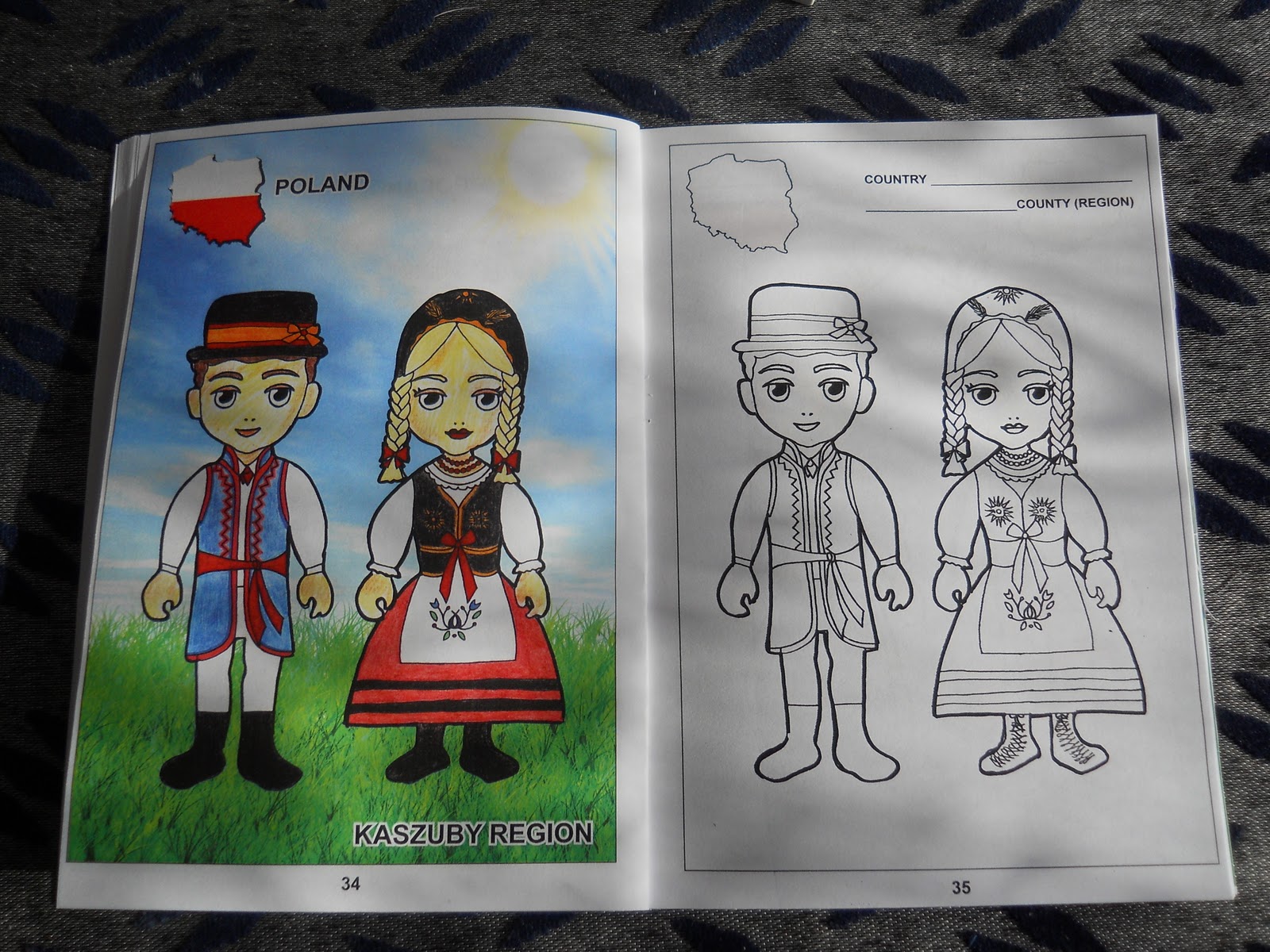
Traditional costumes around Europe - Coloring book and Card game


Last school year (2010-2011) we all studied the traditional costumes from our countries. The end product that  has resulted is a Colouring book and a Card game called "Ethno treasure hunt - Traditional costumes around Europe". They contain the drawings and descriptions of traditional costumes from several regions of the six countries involved in the project: Bulgaria, Italy, Lithuania, Poland, Romania and Turkey.


Octavian Pop, the Romanian Arts teacher has coordinated the realization of these products, as he proposed them from the very beginning. He was helped, here in Romania, by his wife, Marcela Pop, by Marcela Zaplac to make the model and the descriptions of the Romanian costumes. He worked with some of his students ( Dan Cont, Alexandru Morar, Roxana Unguras, Sergiu Pop, Darius Miclaus, Raul Fozecas and Vasile Temian) to draw and colour the Romanian costumes. And I, Daniela Buda, translated the texts into English.


We have described the costumes and we added the project Anthem:


As I have already stated, this product is the result of our joint effort, so I will also present the partner teams who worked on this product:


The Polish partners:
Teachers: Joanna Wilczyńska, Izabela Marczak, Dorota Zajączkowska,
Students: Oliwia Ormaniec, Aleksandra Grandys, Klaudia Garncarek, Magdalena Głowacka, Aleksandra Stasiak



The Turkish partners:
Teacher: Özgür Boyacı
Student: Ismail Kaygısız


The Lithuanian partners:
Teachers: Rima Stongviliene, Renata Jankeviciene
Students: Gabriele Brazinskaite, Urte Brazinskaite


The Italian partners:
Teachers: Briguglio Antonio, Miuccio Anna Maria, Linda Cigala, Nina Morabito, Mimma Crupi
Students: children from class 2A and 2B from Instituto Comprensivo di Santa Teresa di Riva


The Bulgarian partners:
Teachers: Valentina Kercheva, Daniela Ruseva, Maria Spasova
Students: Kristiyan  Stanev, Berin Yahov, Radostina Rumenova, Seihan Asan, Rubin Iliev, Stiliyan Emilov, Teodora Velcheva, Jeihan Behir,  Emin Nazif, Elica Doncheva, Rumyana Ivanova, Doroteya Kraicheva, Kristina Encheva, Magdalena Manova, Yoanna Markova, Merlin Zeinolova, Yasmin Samirova, Rumyana Andreeva; Velika Todorova, Lyubomira Stoyanova, Maria-Magdalena Stoyanova, Plamena Petrova, Hristiana Naidenova


We have done a very good job, haven't we? :)


Romanian version:


Anul trecut scolar (2010-2011), am studiat costumele p[opulare din tarile noastre, Produsul final rezultat din aceasta cercetare il reprezinta Cartea de colorat si jocul de carti “Ethno treasure hunt – Costume populare din Europa". Acestea contin desene si descrierea unor costumelor traditionale din deiferite regiuni din cele sase tari implicate in proiect: Bulgaria, Italia, Lithuania, Polonia, Romania si Turcia.
Octavian Pop, profesorul nostru de arte, a coordonat realizarea acestor produse, avand in vedere faptul ca el a propus aceste produse inca din faza de redactare a aplicatiei pentru proiect. El a fost ajutat sa realizeze modelele si descrierile costumelor de catre Marcela Pop si Marcela Zaplac. Octavian a lucrat cu elevii sai ( Dan Cont, Alexandru Morar, Roxana Unguras, Sergiu Pop, Darius Miclaus, Raul Fozecas and Vasile Temian) la desenarea si colorarea costumelor româneşti. Iar eu, Daniela Buda, am tradus textele in limba engleza.
Am descris costumele si am adaugat in carte si imnul proiectului.
Dupa cum am mai spus, aceste produse au fost realizate in colaborare cu partenerii nostri, asa ca am prezentat si profesorii si elevii din scolile partenere, care au lucrat la ele.


Daniela Buda - European project coordinator

Teaching English in another way

Marcela Zaplac, my colleague, has used Origami in teaching her students handicraft skills, art, but she also taught them stories and poems and Maths calculations using the paper products the children made during their Art classes or Handicraft classes. She has done some research and found out that Origami has also been used for education of the children and adults with different learning disabilities.

That is why, this school year, when they have started to learn English as a foreign language - they are in the 3rd grade, we decided to use their origami skills in learning English. I was aware that they could not learn English by using the traditional way of teaching. Due to the fact that they could only learn at school (as their parents don't have the time or education level to help them), and some of them have certain learning disabilities, I decided to try to teach them to use English communicatively, but only orally this year. Maybe next year they will be able to read and write a few words. I hope so.

Anyway, it has proved to be a great success so far: the children have learnt orally all the vocabulary and structures I have taught them. They know all the colours and some objects from the class, the numbers 1-10, some animals, etc. They can use such structures as : "I have a white cat on a red carpet. This is a big red pencil. This is a small yellow pencil. The big blue pencil is in the pink pencilbox. The teacher has diamonds in the treasure box (chest*). The green bird is on the brown tree." And so on.

On September 26, 2011, we celebrated The European Day of Foreign Languages and had a very interesting lesson, we learned a nice song in English, too, as it was at the very beginning of this school year.  Since then we have learned a lot of words and structures in English.

We also use the Computer science lab to practice colours and learn new vocabulary using the Paint programme: the children had to colour the animals they saw and describe their colours. This way they learnt the names of some animals.

Recently we had a visit from the school headmistress and she was very impressed by what these children could speak in English. We also had some foreign guests from the Czech Republic, who visited our school, and they were also very much impressed.

It is hard work, but we all enjoy the lessons. The children are thrilled when we use the paper or other objects they make and this also motivates them. And each class, the students who are the most attentive and more active are rewarded with a "treasure" from our project Treasure chest. And they are very happy about this.
Here are some photos from our activities:


Romanian version:

Colega mea, Marcela Zaplac, a folosit Origami in predare la orele de Educatie plastica si Lucru manual, dar i-a invatat si poezii si povestiri, chiar si calcule matematice folosind obiectele de hartie si alte produse realizate de elevi la aceste ore. Ea a studiat foloasele utilizarii origami, si a aflat ca acest tip de arta este folosit si ca mijloc de educare a copiilor si adultilor cu disabilitati de invatare.
De aceea, in acest an scolar (2011-2012), cand clasa ei a inceput sa invete engleza, am hotarat impreuna sa folosim deprinderile elevilor de a lucra origami si in invatarea limbii engleze. Eram foarte constienta de faptul ca ei nu pot invata limba engleza in mod traditional. Datorita faptului ca acesti elevi pot invata doar la scoala (deoarece parintii lor nu au timpul sau educatia necesare sa-i ajute) si ca sunt unii cu dizabilitati de invatare, am hotarat sa incerc sa-i invat engleza in mod comunicativ, doar oral in acest an. Poate anul viitor vom putea invata sa si citim si sa scriem in engleza. Eu sper acest ;ucru.
Planificarea materiei, folosind manualul ales, nu o pot folosi, asa ca imi adaptez activitatea pe parcurs, in functie de ceea ce invata copiii la celelalte materii. Practic, e un experiment didactic, realizat in echipa cu invatatoarea lor, adaptat la nivelul si posibilitatile lor de invatare.
Oricum, pana acum s-a dovedit a fi un succes: desi au inceput sa invete engleza doar de la mijlocul lunii septembrie, ei au invatat deja, oral, toate elementele de vocabular si structurile pe care le-am predat. Ei cunosc toate culorile si cateva obiecte din clasa, numerele de la 1-10, cateva animale, etc. Ei pot deja sa foloseasca unnele structuri gramaticale, cum ar fi: I have a white cat on a red carpet. This is a big red pencil. This is a small yellow pencil. The big blue pencil is in the pink pencilbox. The teacher has diamonds in the treasure box (chest*). The green bird is on the brown tree."
In 26 septembrie 2011, am sarbatorit Ziua Europeana a Limbilor straine in cadrul unei lectii de engleza, care a fost foarte interesanta, avand in vedere ca era chiar la inceputul anului scolar. Am invatat cateva elemente de vocabular si un cantecel in engleza. De atunci am invatat mai multe.
Folosim si calculatoarele din cabinetul AEL pentru a fixa cele invatate (culori, numere, etc.) si pentru a invata cuvinte si structuri noi. Folosind programul Paint, copiii trebuie sa coloreze animalele ce le gasesc acolo si sa le descrie in limba engleza. Astfel, ei invata si numele animalelor in limba engleza.
Recent am d-na directoare a venit in vizita la noi la ora de engleza si a fost foarte impresionata de felul in care copiii din aceasta clasa vorbesc in engleza. Am avut si o vizita in scoala din partea unei delegatii din Republica Ceha, si ei au fost foarte placut impresionati cand au venit si la noi si au putut comunica in engleza cu elevii din aceasta clasa.
E munca multa, si trebuie multa rabdare, dar noua ne plac orele impreuna. Copiii se bucura foarte mult cand folosim materialele realizate de ei la orele de desen si lucru manual, si vad ca acestea sunt folosite practic, interdisciplinar. Si, la fiecare ora, elevii care sunt mai atenti si mai activi la ore sunt rasplatiti cu o “comoara” din “Cufarul cu comori ethno” al proiectului Comenius. Si eie sunt foarte fericiti de asta.
Puteti vedea si cateva poze de la activitatile noastre.

Daniela Buda, teacher of English,
Comenius project coordinator